

Is your small business struggling to attract local customers? This ultimate guide to local SEO will provide you with the essential strategies to dominate local search results. Learn how to optimize your Google My Business profile, build high-quality local citations, and leverage the power of local keyword research to skyrocket your online visibility and drive significant local traffic to your business. Discover the proven techniques to boost your local SEO ranking and gain a competitive edge in your market. Unlock the secrets to local search engine optimization success and watch your business thrive.
What is Local SEO and Why is it Important?
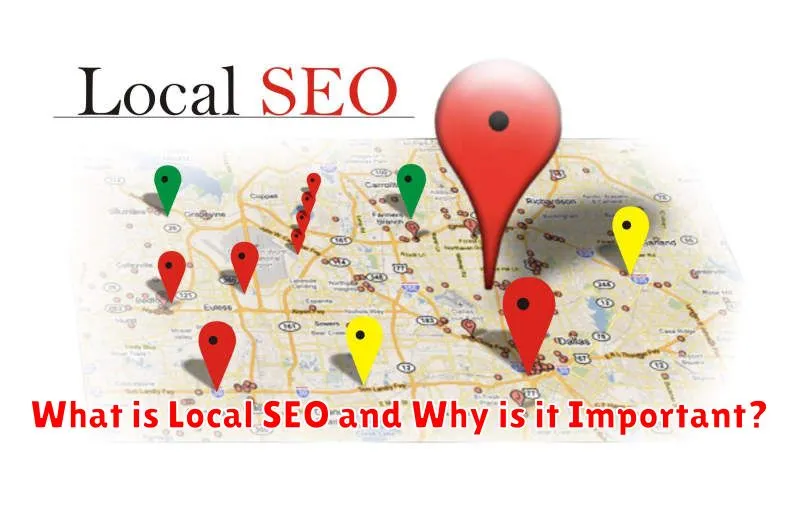
Local SEO is the practice of optimizing your online presence to attract customers searching for businesses in your local area. It focuses on improving your ranking in local search results, such as Google Maps and Google’s local pack.
It’s crucial for small businesses because most customers search locally. When someone searches for “best pizza near me,” they expect to see nearby restaurants. Strong local SEO ensures your business appears prominently in these searches, driving increased visibility, website traffic, and ultimately, more customers. Without it, you risk losing out to competitors who are effectively leveraging local search.
Key elements of local SEO include optimizing your Google My Business profile, building local citations (online directories), getting local reviews, and ensuring your website is optimized for local keywords. Effectively implementing these strategies can significantly improve your bottom line.
How to Optimize Your Google My Business Profile

Optimizing your Google My Business (GMB) profile is crucial for local SEO success. A well-optimized profile ensures your business appears prominently in local search results, attracting more customers.
First, claim and verify your Google My Business listing. This establishes your business’s online presence on Google. Next, complete your profile completely and accurately. Include your business name, address, phone number (NAP), website, hours of operation, and a detailed description. Use keywords relevant to your business and target audience in your description.
High-quality photos are essential. Upload professional photos of your business, products, services, and team. Encourage customer reviews; positive reviews build trust and improve your search ranking. Respond to both positive and negative reviews professionally and promptly.
Regularly update your GMB profile with any changes to your business information, including hours of operation, special offers, and new services. Utilize the posts feature to announce promotions and share engaging content. Finally, monitor your GMB Insights to track performance, identifying what works well and areas for improvement.
By following these steps, you can significantly enhance your GMB profile’s visibility and attract more local customers. Remember, consistency and accuracy are key to success.
The Role of Online Reviews in Local Rankings
Online reviews play a crucial role in local search engine rankings. Search engines like Google consider the quantity and quality of reviews when determining a business’s local ranking. A higher volume of positive reviews signals to algorithms that your business is reputable and trustworthy, thus boosting your visibility in local search results.
Positive reviews directly impact your local SEO. They improve your business’s star rating, a key factor in attracting potential customers. Conversely, negative reviews, while unavoidable, can harm your rankings if left unaddressed. Responding professionally and resolving customer issues demonstrates your commitment to excellent service, mitigating the negative impact.
Review platforms such as Google My Business, Yelp, and others are essential for local SEO. Claiming and actively managing your profiles on these platforms is critical. Encouraging satisfied customers to leave reviews is a proactive approach to improving your local search ranking. The more reviews you have, the more data search engines have to assess your business’s reputation.
In short, prioritizing online reviews is not merely about reputation management; it’s a fundamental aspect of improving your local search engine ranking and visibility. Consistent effort in obtaining and managing reviews is a key component of a successful local SEO strategy for small businesses.
Using Local Keywords for Better Visibility
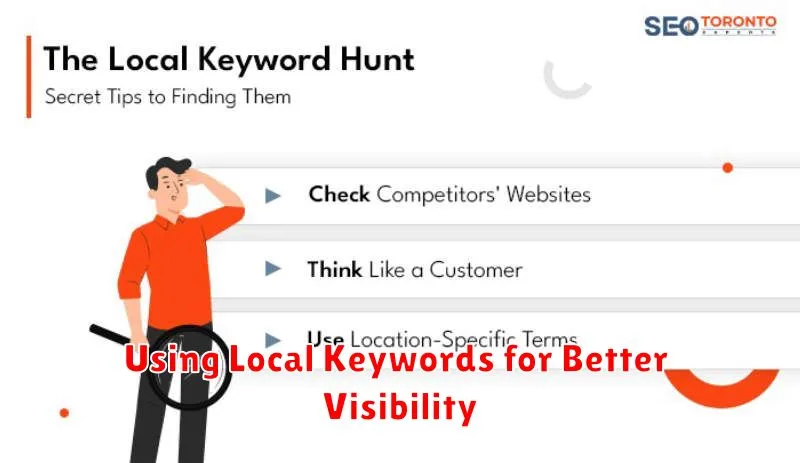
Optimizing your website with local keywords is crucial for boosting your search engine ranking and attracting local customers. These keywords are specific to your geographic area and reflect how people in your community search for businesses like yours. For example, instead of just “pizza,” you might use “pizza delivery [your city]” or “best pizza near me [your neighborhood].”
Effective keyword research is paramount. Utilize tools like Google Keyword Planner, explore related searches on Google, and analyze your competitors’ keywords to identify relevant phrases with high search volume but low competition. Consider incorporating variations of your city, state, zip code, and neighborhood into your keywords.
Once you’ve identified your target keywords, strategically integrate them into your website content, including your title tags, meta descriptions, header tags (H1-H6), image alt text, and body text. However, avoid keyword stuffing; focus on natural language that provides value to users while incorporating your keywords organically.
Beyond your website, utilize local citations – online directories like Google My Business, Yelp, and industry-specific listings – to ensure consistency in your business information (name, address, phone number – NAP) and build your online presence. Each citation acts as a backlink, boosting your local SEO.
Regularly monitor your keyword rankings using SEO tools to assess the effectiveness of your strategy. Track your progress and adjust your approach as needed. Consistent effort in local keyword optimization will significantly improve your visibility to potential customers in your area.
Building Local Citations and Backlinks
Local citations are mentions of your business name, address, and phone number (NAP) across various online directories. Consistency in your NAP information is crucial for search engines to accurately identify and rank your business. Inconsistent NAP data can lead to confusion and hurt your local SEO efforts.
Building citations involves claiming and updating your business profiles on platforms like Google My Business, Yelp, Bing Places, and other relevant industry-specific directories. Aim for a variety of sources, both high-authority and niche-specific, to maximize your reach.
Backlinks, though different from citations, are equally vital for local SEO. These are links from other websites pointing back to your website. While local citations focus on your NAP, backlinks improve your website’s overall authority and trustworthiness in the eyes of search engines. Earn backlinks through guest blogging, local partnerships, and participation in online communities.
When building both citations and backlinks, prioritize quality over quantity. A few high-quality, relevant citations and backlinks are more impactful than many low-quality ones. Regularly monitor your citations for accuracy and address any inconsistencies promptly.
How to Leverage Google Maps for Business Growth
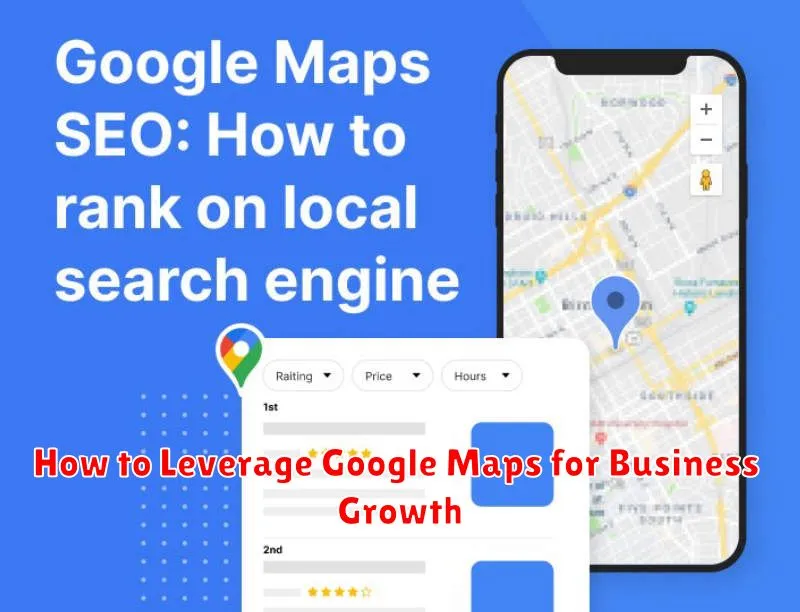
Optimizing your Google Maps listing is crucial for local SEO success. A complete and accurate profile ensures your business appears in relevant searches. Accurate information, including your name, address, and phone number (NAP), is paramount. Inconsistent NAP data across the web harms your ranking.
High-quality photos showcase your business and products/services. Think professional, appealing imagery that conveys your brand and offerings. Encourage customer reviews; positive reviews build trust and improve your search ranking. Respond to both positive and negative reviews professionally to show customer engagement.
Utilize Google My Business (GMB) features. Add your business hours, services offered, and special offers. Consider using the Q&A section to address common customer queries. Regularly update your GMB profile to keep information current. This demonstrates to Google that your business is active and relevant.
Monitor your performance. Track your Google Maps ranking, views, and customer interactions. This data informs your strategy and helps you identify areas for improvement. Regularly analyzing and adjusting your GMB profile ensures optimal visibility and maximizes your business’s potential.
Mobile Optimization for Local Search
Mobile optimization is crucial for local SEO success. A majority of local searches now originate from mobile devices. Therefore, ensuring your website is mobile-friendly is no longer optional; it’s essential.
Responsive design is key. Your website should adapt seamlessly to different screen sizes, providing a consistent and user-friendly experience across all devices. This includes easy navigation, clear calls to action, and fast loading speeds.
Local search optimization for mobile involves ensuring your Google My Business profile is complete and accurate, including up-to-date business hours, contact information, and high-quality photos. Mobile users often rely on Google Maps, making a strong GMB presence vital.
Page speed is paramount. Mobile users have little patience for slow-loading websites. Optimize images, minimize HTTP requests, and leverage browser caching to improve your site’s speed and user experience.
Structured data markup helps search engines understand your business information better, leading to improved rankings in local search results on mobile devices. Schema.org provides valuable resources for implementing this markup correctly.
Mobile-first indexing means Google primarily uses the mobile version of your website to index and rank it. Prioritize the mobile experience to ensure your website is optimized for Google’s crawlers.
By focusing on these mobile optimization strategies, small businesses can significantly improve their visibility in local search results and attract more customers via mobile devices.
Tracking and Measuring Local SEO Success
Tracking your local SEO success requires a multi-faceted approach. Key performance indicators (KPIs) should include both on-page and off-page factors.
On-page metrics focus on your website’s optimization. Monitor your website rankings for relevant local keywords using tools like Google Search Console. Analyze your website traffic, paying attention to the geographic location of visitors. Track your conversion rates – are visitors completing desired actions like making a purchase or requesting a quote?
Off-page factors relate to your online reputation and presence. Monitor your Google My Business (GMB) profile for changes in ranking, reviews, and customer engagement. Track your citations – the number of times your business is listed online with consistent information. Pay close attention to your online reviews across various platforms, as they heavily influence local search rankings and customer perception.
Regularly analyzing these KPIs provides valuable insights into the effectiveness of your local SEO strategy. This data allows you to identify areas for improvement, optimize your efforts, and ultimately achieve greater visibility and increased business.
