

Generating leads for your online business is crucial for growth and success. This comprehensive guide will equip you with effective strategies to attract high-quality leads, convert them into paying customers, and ultimately boost your online business revenue. We’ll explore various lead generation techniques, including content marketing, SEO optimization, social media marketing, email marketing, and paid advertising, providing actionable steps to implement each strategy and measure your return on investment (ROI). Learn how to build a robust lead generation system that consistently delivers qualified leads and drives sustainable business growth.
Understanding the Importance of Lead Generation
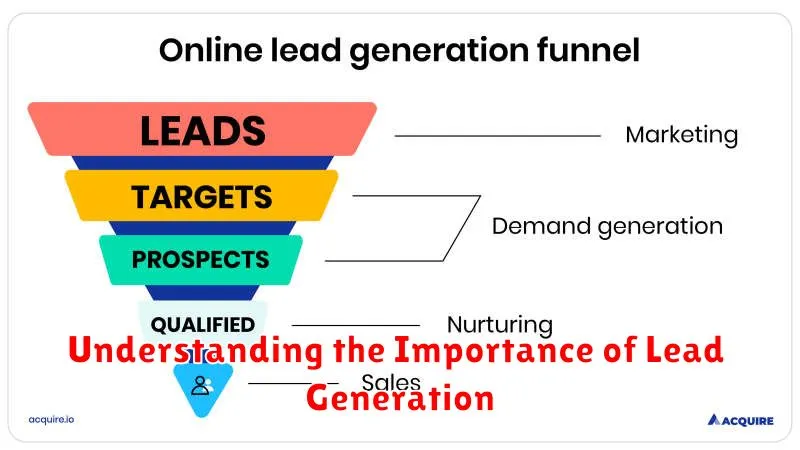
Lead generation is the cornerstone of any successful online business. It’s the process of attracting and capturing potential customers who have shown interest in your products or services.
Without a steady stream of leads, your business will struggle to grow. Leads represent future sales and revenue. The more qualified leads you generate, the higher your chances of converting them into paying customers.
Effective lead generation allows for targeted marketing. By understanding your audience, you can craft compelling messaging and offers that resonate with their needs, increasing the likelihood of conversion.
Ultimately, lead generation is about building a strong pipeline of opportunities. It provides valuable data about your target market, enabling you to refine your strategies and optimize your marketing efforts for better results.
Investing time and resources in lead generation is an investment in your business’s long-term success and sustainable growth.
Best Lead Magnet Ideas to Capture Customer Interest
Generating leads is crucial for any online business. A lead magnet is a valuable free offer in exchange for a prospect’s contact information. Effective lead magnets pique interest and provide value, encouraging sign-ups.
Checklists are highly effective. They offer actionable steps, solving a specific problem for your target audience. A checklist on “10 Steps to a Perfect Instagram Feed” could attract aspiring influencers.
Templates are another great option. These provide a framework or structure for a task. A “Social Media Content Calendar Template” can be incredibly useful for busy business owners.
Ebooks offer more in-depth information. A well-written ebook on a relevant topic positions you as an expert and provides significant value to the reader. Ensure your ebook addresses a specific pain point.
Webinars provide live, interactive content. They build community and allow you to showcase your expertise, turning attendees into qualified leads.
Discount codes or free trials offer immediate gratification and incentivize immediate action. This works particularly well for product-based businesses.
Case studies showcasing your successful work build trust and demonstrate your capabilities. They offer social proof and can be particularly compelling for B2B businesses.
The key is to choose a lead magnet that is highly relevant to your target audience and provides genuine value. By offering something of real worth, you can effectively capture customer interest and grow your email list.
How to Use Landing Pages for Lead Generation
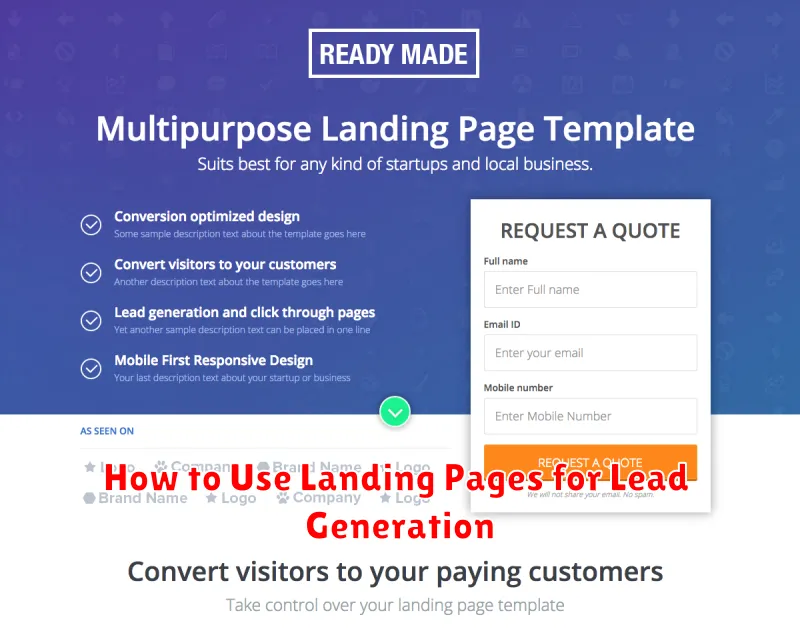
Landing pages are crucial for effective lead generation. They serve as dedicated web pages designed to capture visitor information in exchange for valuable content or offers. Unlike general website pages, landing pages focus on a single, specific call to action (CTA), maximizing conversion rates.
To use landing pages effectively, start with a clear objective. Define what information you need from visitors (e.g., email address, phone number) and what you’ll offer in return (e.g., ebook, webinar registration, free consultation). This forms the foundation of your value proposition.
Next, create compelling content. This should directly address the visitor’s needs and highlight the benefits of your offer. Keep the design clean and uncluttered, focusing on the CTA. Use strong visuals and concise language.
A/B testing is vital. Experiment with different headlines, images, and CTAs to see what resonates best with your audience. Analyze your results and continuously optimize your landing page for better performance. Track your key performance indicators (KPIs), such as conversion rates and bounce rates, to measure success.
Finally, integrate your landing page with your marketing efforts. Drive traffic to your landing page through targeted advertising campaigns, social media promotions, and email marketing. Ensure seamless integration with your CRM for efficient lead management.
Email Marketing Strategies to Nurture Leads
Email marketing is a powerful tool for nurturing leads and converting them into customers. A well-executed strategy focuses on providing value to your audience, building relationships, and ultimately driving conversions.
Start by segmenting your email list based on demographics, behavior, and engagement levels. This allows for personalized messaging that resonates with specific audience needs. For example, send targeted content to new subscribers, focusing on introductory offers and building trust.
Employ a drip campaign to automatically deliver a series of emails over a set period. This allows for a consistent communication flow, educating leads on your products or services and guiding them towards a purchase. Each email should offer valuable content, like blog posts, tutorials, or case studies.
Personalization is key. Use the recipient’s name in the subject line and body of the email. Tailor the content to their interests and past interactions. This demonstrates that you understand their needs and value their time.
Include a clear call to action (CTA) in every email. This could be a link to your website, a product page, or a scheduling tool. Make your CTAs visually appealing and easy to find.
Monitor your results closely. Track open rates, click-through rates, and conversion rates to optimize your campaigns over time. A/B test different subject lines, email content, and CTAs to determine what resonates best with your audience.
Finally, ensure your emails are mobile-friendly and comply with all relevant regulations, such as CAN-SPAM.
The Role of Webinars in Lead Generation
Webinars are a powerful tool for lead generation in the online business world. They offer a unique opportunity to engage prospective customers in a valuable and interactive way.
By hosting webinars on topics relevant to your target audience, you can attract interested individuals and establish yourself as a thought leader in your industry. This positions your business as a reliable source of information and solutions.
Webinars allow for direct interaction with potential leads. You can answer questions, address concerns, and build rapport, fostering trust and encouraging conversions. The live nature of webinars also adds a sense of urgency and immediacy, prompting quicker decisions.
Furthermore, webinars provide valuable data. You can track registrations, attendees, and engagement levels to refine your strategy and improve future webinars. This data allows for targeted marketing efforts and better lead nurturing.
Finally, webinars offer a scalable solution. Once recorded, a webinar can be repurposed as valuable content for your website, social media, and email marketing campaigns, continuously generating leads over time.
Using Social Media to Attract Potential Customers
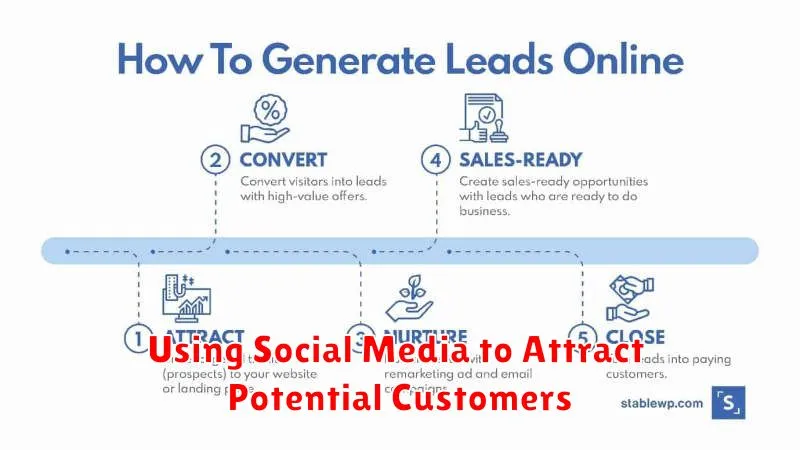
Social media platforms offer a powerful way to connect with potential customers and generate leads. Targeted advertising allows you to reach specific demographics based on interests, location, and behavior, ensuring your message reaches the right audience. This precision marketing minimizes wasted ad spend and maximizes your return on investment.
Engaging content is crucial for attracting and retaining followers. Share valuable, informative, and entertaining content relevant to your industry. This could include blog posts, videos, infographics, or behind-the-scenes glimpses into your business. Remember to consistently post high-quality content to maintain audience engagement.
Interactive features, such as polls, quizzes, and Q&A sessions, encourage audience participation and build a strong community around your brand. This interaction increases brand visibility and fosters customer loyalty. Responding promptly to comments and messages demonstrates your commitment to customer service and builds trust.
Utilizing social listening allows you to monitor conversations about your brand and industry. This helps identify potential leads who are actively searching for solutions you offer. You can then proactively engage with these individuals and offer assistance, furthering the lead generation process.
Finally, track your results. Monitor key metrics such as engagement rates, website clicks, and conversions to assess the effectiveness of your social media strategy and make data-driven adjustments for improved performance.
How to Automate Lead Generation for Scalability
Automating lead generation is crucial for scaling your online business. It allows you to consistently capture qualified leads without relying solely on manual efforts. This frees up your time and resources to focus on other critical aspects of growth.
Effective automation involves integrating various tools and strategies. Consider using marketing automation platforms to manage email campaigns, nurture leads, and track performance. These platforms allow for segmented messaging, personalized experiences, and automated follow-ups, significantly improving conversion rates.
Landing pages optimized for conversion are essential. They should clearly communicate your value proposition and include compelling calls to action. Pair these with paid advertising campaigns (like Google Ads or social media ads) targeted to your ideal customer profile to drive traffic to these high-converting pages.
Chatbots can provide immediate support and collect lead information 24/7. They can qualify leads based on pre-defined criteria, ensuring your sales team only focuses on high-potential prospects. This is a particularly scalable solution for handling high volumes of inquiries.
Regularly analyze your data to optimize your automation strategies. Track key metrics like lead generation sources, conversion rates, and customer acquisition cost. This data-driven approach ensures you’re continually refining your processes for maximum efficiency and scalable growth.
Tracking and Measuring Lead Generation Performance
Tracking and measuring the performance of your lead generation efforts is crucial for optimizing your strategies and maximizing your return on investment (ROI). Effective tracking provides valuable insights into what’s working and what’s not.
Key Metrics to monitor include: website traffic (from various sources), conversion rates (from visitors to leads), lead quality (scored based on factors like engagement and demographics), and cost per lead (CPL). Analyzing these metrics helps identify bottlenecks and areas for improvement.
Tools for tracking include website analytics platforms (like Google Analytics), CRM systems (for managing leads and tracking interactions), and marketing automation platforms (for automating lead nurturing and tracking campaign performance).
Regularly reviewing your data and making data-driven adjustments to your strategies is essential. This iterative process ensures continuous improvement in your lead generation efforts. Don’t just focus on quantity; prioritize quality leads that are more likely to convert into paying customers.
By implementing a robust tracking and measurement system, you can gain a clear understanding of your lead generation effectiveness and make informed decisions to boost your online business’s growth.
