
The rise of artificial intelligence (AI) is revolutionizing the e-commerce landscape, and at the forefront of this transformation are chatbots. These intelligent virtual assistants are no longer simple FAQs; they are sophisticated tools enhancing customer experience, boosting sales, and streamlining operations. This article delves into the significant impact of chatbots in e-commerce, exploring how this AI-powered technology is reshaping online shopping for both businesses and consumers, from improved customer service and personalized recommendations to automated order processing and 24/7 availability. Discover how leveraging AI chatbots can be a game-changer for your online business.
The Rise of AI Chatbots in E-commerce
The adoption of AI-powered chatbots in e-commerce has experienced a significant surge in recent years. Driven by advancements in natural language processing (NLP) and machine learning (ML), these chatbots are becoming increasingly sophisticated and capable of handling complex customer interactions.
This rise is fueled by several key factors. Improved customer experience is paramount, with chatbots providing instant support, 24/7 availability, and personalized assistance. Businesses also benefit from increased efficiency and cost reduction, as chatbots automate many routine tasks, freeing up human agents to focus on more complex issues.
Furthermore, the ability of AI chatbots to gather and analyze vast amounts of customer data provides valuable insights for businesses. This data can be leveraged to improve products, services, and marketing strategies, ultimately leading to enhanced profitability and a stronger competitive advantage.
The future of e-commerce is undeniably intertwined with the continued development and integration of AI chatbots. As the technology continues to advance, we can expect even more seamless and personalized online shopping experiences, driving further growth and innovation in the sector.
How Chatbots Improve Customer Service
Chatbots significantly enhance customer service in e-commerce by providing instantaneous support. Unlike human agents, chatbots are available 24/7, addressing customer queries even outside of business hours.
They offer immediate responses, reducing customer wait times and improving overall satisfaction. This speed significantly reduces frustration and improves the shopping experience.
Chatbots can handle a high volume of queries simultaneously, efficiently managing numerous customer interactions without compromising service quality. This scalability is crucial for businesses experiencing peak demand periods.
Furthermore, they offer personalized experiences. By utilizing customer data, chatbots can tailor responses and offer relevant product recommendations, enhancing engagement and potentially increasing sales.
Cost-effectiveness is another key advantage. Chatbots automate many routine tasks, reducing the need for a large customer service team and lowering operational costs.
Finally, chatbots provide consistent service, ensuring that every customer receives the same level of helpfulness and information, regardless of the agent or time of day.
Best AI Chatbot Platforms for Online Stores
Integrating AI chatbots into your e-commerce strategy offers significant advantages, enhancing customer service and boosting sales. Several platforms stand out for their robust features and ease of integration with online stores.
Shopify offers its own chatbot app, providing a seamless integration for Shopify users. Its simplicity makes it a great option for smaller businesses.
ManyChat is a popular choice, known for its user-friendly interface and powerful automation capabilities. It excels at creating engaging conversational experiences and driving conversions.
Dialogflow (Google Cloud) is a more advanced platform ideal for larger businesses needing sophisticated features. It allows for natural language processing and complex chatbot development, but requires more technical expertise.
Chatfuel is another strong contender, particularly appreciated for its ease of use and integration with various platforms, including Facebook Messenger. It caters to both simple and more complex chatbot needs.
Intercom focuses on providing a comprehensive customer communication platform, incorporating chatbots alongside other tools for live chat and email support. It’s best suited for businesses prioritizing a unified customer communication strategy.
The best platform for your online store depends on factors such as your technical capabilities, budget, and the complexity of your chatbot requirements. Consider your specific needs carefully before selecting a provider.
Using Chatbots to Increase Sales and Engagement
E-commerce businesses are increasingly leveraging chatbots to boost sales and customer engagement. These AI-powered tools offer 24/7 availability, providing immediate assistance to shoppers regardless of time zone.
Chatbots can significantly improve the customer experience by answering frequently asked questions, guiding users through the purchase process, and providing personalized product recommendations. This instant support reduces frustration and improves the likelihood of conversion.
Beyond immediate support, chatbots facilitate proactive engagement. They can send targeted messages based on browsing history, abandoned carts, or purchase anniversaries, prompting customers to complete their purchases or explore related products. This personalized approach fosters stronger customer relationships and increases sales.
The ability to gather valuable customer data is another key benefit. Chatbot interactions provide insights into customer preferences, pain points, and purchasing behavior. This information allows businesses to refine their strategies, personalize their offerings, and enhance overall customer satisfaction.
Ultimately, the strategic implementation of chatbots can lead to a substantial increase in sales and a more engaged customer base, establishing a competitive edge in the dynamic e-commerce landscape.
Automating Customer Support with AI
AI-powered chatbots are revolutionizing customer support in e-commerce. They offer 24/7 availability, instantly addressing common customer queries such as order tracking, returns, and shipping information.
This automation significantly reduces the workload on human agents, allowing them to focus on more complex issues requiring personal interaction. Increased efficiency translates to faster response times and improved customer satisfaction.
Scalability is another key benefit. Chatbots can handle a large volume of concurrent conversations without compromising service quality, making them ideal for businesses experiencing rapid growth or seasonal peaks in demand.
Beyond basic queries, advanced chatbots leverage natural language processing (NLP) and machine learning (ML) to understand complex requests and provide personalized solutions. This capability enhances the overall shopping experience and fosters customer loyalty.
Implementing AI-driven chatbots requires careful planning and integration with existing systems. However, the resulting improvements in efficiency, customer satisfaction, and scalability make it a worthwhile investment for any e-commerce business seeking to optimize its customer support operations.
How to Personalize Customer Interactions with Chatbots
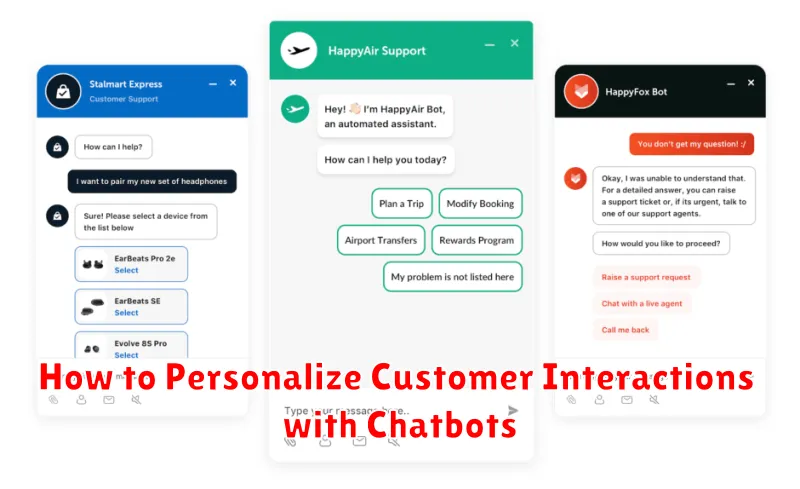
Personalizing chatbot interactions is crucial for enhancing customer experience and driving conversions. Data integration is key; leverage customer data from CRM and past interactions to understand individual preferences and purchase history. This allows for personalized greetings and product recommendations.
Employ dynamic content within the chatbot flow. This means tailoring responses based on gathered information. For example, a returning customer might receive different offers or support compared to a first-time visitor. The chatbot should also remember past conversations, avoiding repetitive questions and demonstrating contextual awareness.
Natural Language Processing (NLP) is vital for creating truly personalized experiences. Advanced NLP enables chatbots to understand nuances in language and intent, leading to more human-like and relevant interactions. This allows for proactive assistance, anticipating customer needs based on their behavior.
Finally, offer customized options. Allow customers to set preferences, such as preferred communication channels or product categories. This demonstrates respect for their time and individual needs, ultimately building stronger customer relationships. Regularly analyze chatbot performance metrics to identify areas for improvement and refine personalization strategies.
Measuring the Success of Chatbot Implementations
Measuring the success of chatbot implementations in e-commerce requires a multi-faceted approach focusing on key performance indicators (KPIs). Customer satisfaction is paramount, often measured through surveys and feedback mechanisms. Analyzing resolution rates – the percentage of customer queries successfully handled by the chatbot – provides a crucial metric for efficiency.
Cost savings are another important factor. Tracking the reduction in human agent workload and associated labor costs demonstrates the chatbot’s return on investment (ROI). Furthermore, monitoring chatbot usage and engagement metrics, such as the number of interactions, average session duration, and customer drop-off rates, provides valuable insights into user behavior and areas for improvement.
Beyond these core metrics, analyzing conversion rates – the percentage of chatbot interactions that lead to sales – offers a direct measure of the chatbot’s impact on revenue. Finally, regularly tracking customer feedback on the chatbot’s performance and areas requiring enhancement ensures continuous improvement and optimization.
The Future of AI in Online Shopping
The future of AI in online shopping is bright, promising a more personalized and efficient experience for consumers. AI-powered chatbots will continue to evolve, becoming more sophisticated in understanding natural language and providing proactive customer support. This will lead to reduced wait times and improved customer satisfaction.
Beyond chatbots, AI will play a crucial role in personalized recommendations. By analyzing vast amounts of data on customer preferences and behavior, AI algorithms will deliver highly targeted product suggestions, increasing sales and engagement. This will move beyond simple “customers who bought this also bought that” to deeply personalized suggestions based on individual needs and context.
AI-driven visual search will allow customers to upload images and find similar products, making the shopping process more intuitive and effective. Furthermore, AI will enhance the efficiency of logistics and supply chain management, leading to faster shipping times and improved inventory control.
Ultimately, the integration of AI will transform online shopping into a truly seamless and intelligent experience, catering to individual needs and preferences while optimizing operations for businesses. Predictive analytics will allow businesses to anticipate demand, manage resources effectively, and personalize offers at a scale never before possible.
