
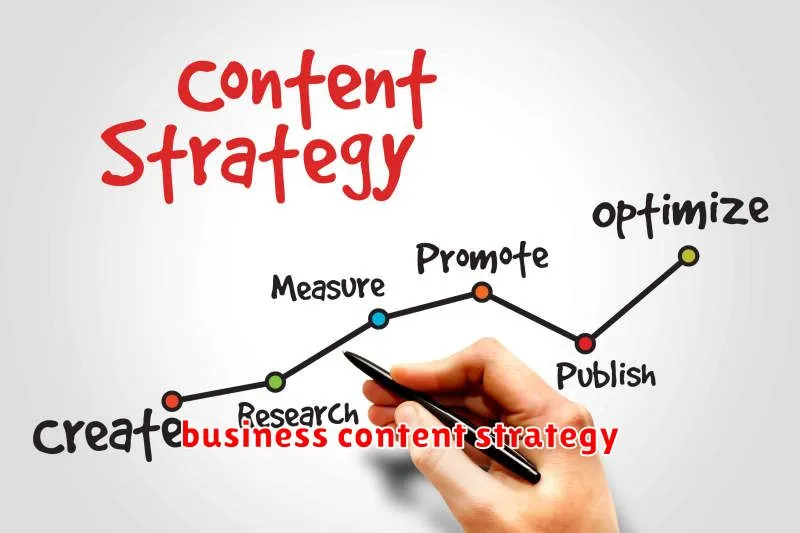
In today’s competitive business landscape, a robust content marketing strategy is no longer optional—it’s essential for achieving business success. This article explores effective content marketing strategies that will help you attract, engage, and retain your target audience, ultimately driving business growth and boosting your bottom line. Learn how to leverage compelling content to establish your brand as a thought leader, increase website traffic, generate high-quality leads, and achieve your marketing goals.
Why Content Marketing is Essential for Businesses
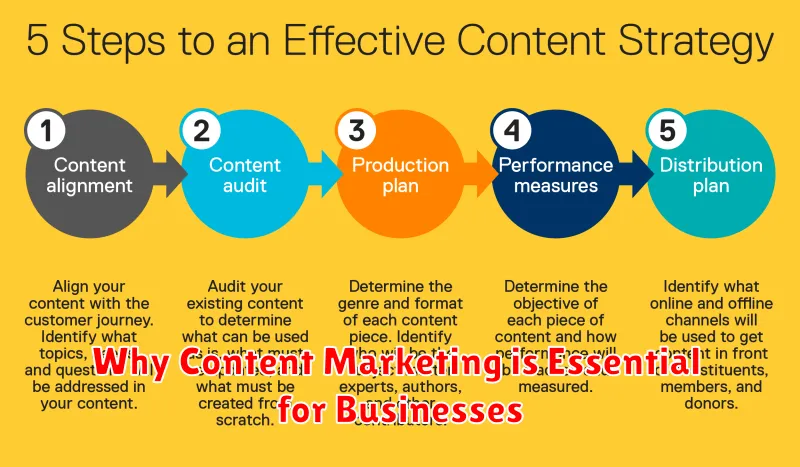
Content marketing is essential for businesses because it fosters a stronger brand identity and customer relationships. By consistently providing valuable and relevant content, businesses establish themselves as thought leaders in their industry.
Furthermore, a robust content strategy drives increased website traffic and improved search engine rankings (SEO). This organic reach significantly reduces reliance on paid advertising, offering a more cost-effective marketing solution.
Ultimately, effective content marketing leads to higher conversion rates and increased sales. By nurturing leads through informative and engaging content, businesses can guide potential customers through the sales funnel more efficiently.
In short, content marketing is not merely a marketing tactic; it’s a strategic investment that builds long-term brand equity and fuels sustainable business growth.
How to Create a Content Strategy That Works
A successful content strategy requires a clear understanding of your target audience and their needs. Begin by defining your ideal customer profile (ICP), identifying their pain points, and understanding where they consume information.
Next, establish SMART goals (Specific, Measurable, Achievable, Relevant, Time-bound). These goals should align with your overall business objectives and provide a framework for measuring success.
Develop a content calendar to plan and schedule your content creation. This ensures consistent publication and helps maintain a steady stream of valuable information for your audience. Consider using various content formats such as blog posts, videos, infographics, and social media updates.
Keyword research is crucial for optimizing your content for search engines. Identify relevant keywords that your target audience uses to find information related to your products or services. Incorporate these keywords naturally into your content.
Finally, measure your results and adapt your strategy accordingly. Track key metrics such as website traffic, engagement, and conversions to understand what’s working and what needs improvement. Regularly analyze your data and make necessary adjustments to optimize your content strategy over time.
The Role of Blog Posts in Driving Traffic
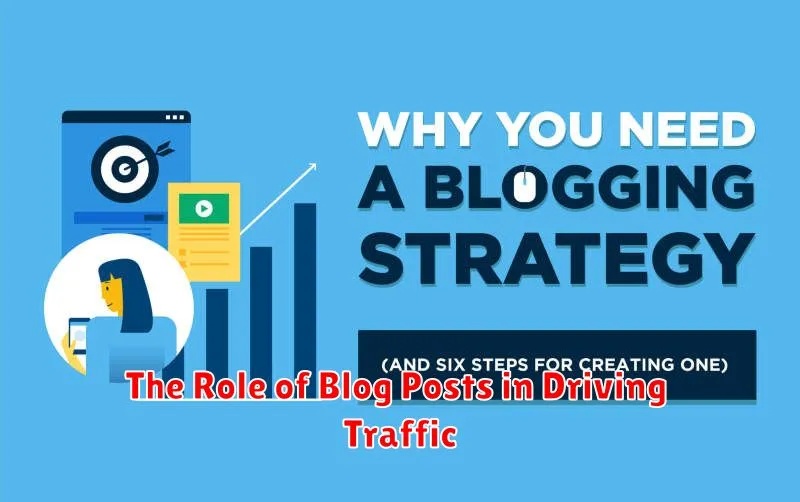
Blog posts serve as a cornerstone of effective content marketing, playing a crucial role in driving traffic to your website. By consistently publishing high-quality, relevant content, you attract organic search traffic through improved SEO (Search Engine Optimization). Well-written blog posts targeting specific keywords can significantly boost your website’s visibility in search engine results pages (SERPs).
Furthermore, engaging blog posts encourage social sharing, expanding your reach beyond your existing audience. Sharing on platforms like Facebook, Twitter, and LinkedIn exposes your content to new potential customers, increasing website traffic organically. The use of compelling titles and concise, informative content is vital for maximizing social media engagement.
Finally, blog posts can drive traffic indirectly through inbound links. When other websites link to your blog posts, it enhances your website’s authority and credibility in the eyes of search engines. This, in turn, improves your ranking and increases organic search traffic.
Using Video Marketing to Engage Audiences
Video marketing is a powerful tool for engaging audiences and boosting brand awareness. It allows for a more personal and dynamic connection than other content formats. The human brain processes visual information much faster than text, making video a highly effective way to communicate your message.
Consider the various types of videos you can create. Explainer videos clearly communicate complex ideas, product demos showcase your offerings, and behind-the-scenes glimpses humanize your brand. Testimonials from satisfied customers build trust and credibility.
Optimization is key. Ensure your videos are high-quality, concise, and optimized for search engines. Use relevant keywords in titles and descriptions, and promote your videos across various social media platforms to maximize reach.
Analytics are crucial for measuring success. Track metrics such as views, engagement, and website traffic to understand what resonates with your audience and refine your video strategy accordingly. This data-driven approach allows for continuous improvement and ensures your video marketing efforts are achieving their goals.
By strategically incorporating video marketing into your content strategy, you can significantly enhance audience engagement, drive conversions, and ultimately contribute to your business’s overall success.
How to Optimize Content for SEO
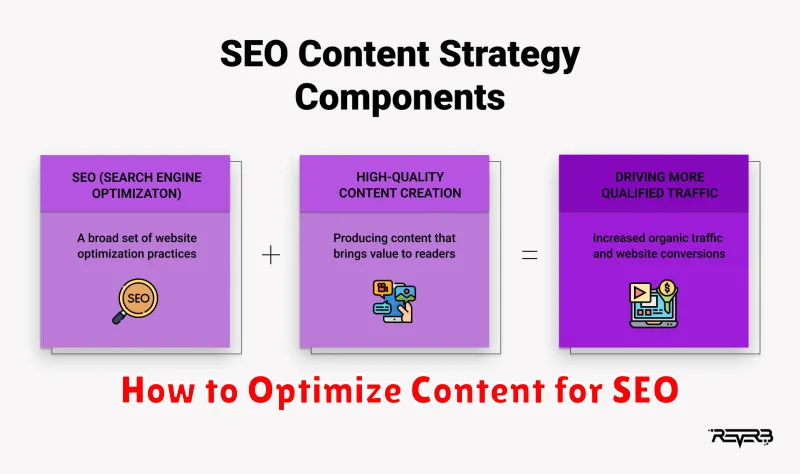
Optimizing content for search engine optimization (SEO) is crucial for business success. It involves aligning your content with what people search for online. Start by identifying relevant keywords using tools like Google Keyword Planner. Integrate these keywords naturally into your page titles, headings (H1-H6), meta descriptions, and body text.
Ensure your content is high-quality, informative, and engaging. Focus on providing value to your target audience. Use clear and concise language, and break up large blocks of text with headings, subheadings, bullet points, and images (though not included in this example). Internal linking, connecting relevant pages within your website, is also important for SEO and user experience.
Technical SEO also plays a significant role. This includes optimizing your website’s speed, mobile-friendliness, and ensuring proper use of schema markup. Regularly monitor your website’s performance using Google Analytics and Google Search Console to track your rankings and identify areas for improvement. Adapting your content strategy based on this data is key to long-term SEO success.
Finally, remember that SEO is an ongoing process. The search landscape is constantly evolving, so continuous optimization and adaptation are vital for maintaining a strong online presence and driving organic traffic to your website.
Leveraging User-Generated Content for Brand Trust
User-generated content (UGC) is incredibly valuable for building brand trust. Authentic reviews, testimonials, and photos from real customers hold significantly more weight than any marketing message created in-house.
By showcasing UGC, businesses demonstrate social proof. Positive experiences shared by others influence potential customers, creating a sense of community and reliability. This transparency fosters trust, showcasing that the brand is genuine and its products or services deliver on their promises.
Strategies for leveraging UGC include actively encouraging customers to share their experiences through contests, reviews platforms, and social media campaigns. Highlighting this content on your website and social media channels amplifies its positive impact. Remember to always obtain proper permissions before using any UGC.
Integrating UGC into your marketing strategy is a powerful way to build authentic connections with your audience, ultimately driving sales and fostering long-term brand loyalty.
Repurposing Content Across Multiple Platforms
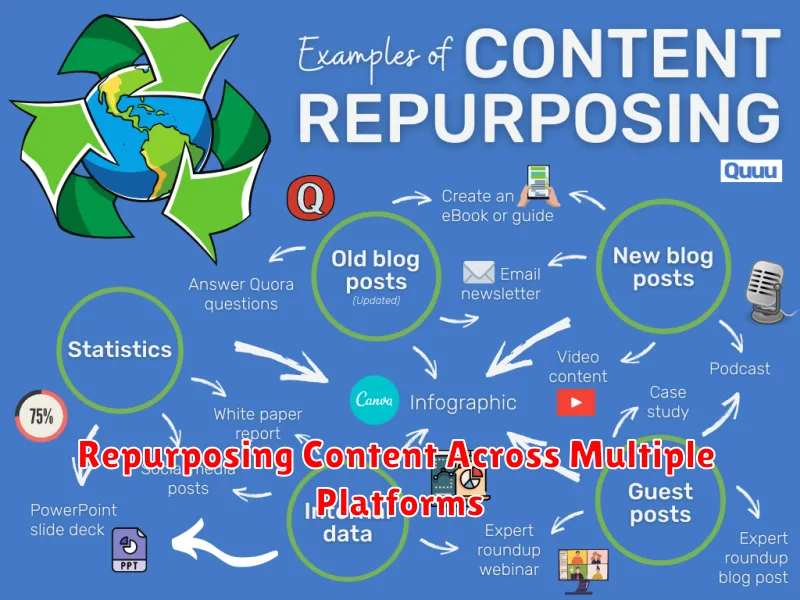
Repurposing content is a highly effective strategy for maximizing your marketing ROI. Instead of creating entirely new content for each platform, adapt existing material to suit different audiences and formats.
A blog post, for instance, can be transformed into a series of shorter social media posts, an infographic, or even a short video. A webinar recording can be edited into several smaller videos for platforms like TikTok or Instagram Reels. This approach saves time and resources while ensuring consistent brand messaging across various channels.
Consider the unique characteristics of each platform when repurposing. Adapt the length, format, and style to resonate with your audience on Twitter versus LinkedIn, for example. A strong understanding of your target audience on each platform is crucial for successful content repurposing.
By strategically repurposing your content, you can extend its reach and lifespan significantly, improving overall marketing effectiveness and saving valuable time and resources.
Measuring Content Performance and ROI
Measuring the effectiveness of your content marketing efforts is crucial for demonstrating return on investment (ROI) and informing future strategies. Key performance indicators (KPIs) should align with your overall business goals.
Website analytics provide valuable data. Track website traffic (unique visitors, page views), engagement metrics (time on site, bounce rate, scroll depth), and conversion rates (leads generated, sales made). These metrics offer insights into content effectiveness.
Beyond website analytics, consider social media engagement (likes, shares, comments), lead generation (form submissions, email sign-ups), and brand mentions. Analyzing these data points helps assess content’s reach and impact.
To calculate ROI, consider the cost of content creation (writing, design, promotion) and compare it to the revenue generated or cost savings achieved as a result of the content. A well-defined attribution model is essential for accurately linking content to specific business outcomes.
Regularly analyzing these metrics and adjusting your content strategy based on the data will ensure optimization for greater impact and a stronger ROI.
