
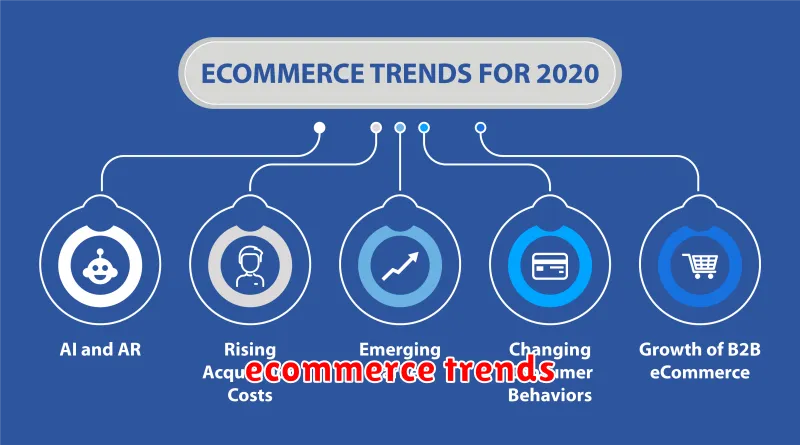
The future of e-commerce is rapidly evolving, driven by groundbreaking innovations and transformative trends. This article explores the key forces shaping the next generation of online retail, examining the impact of artificial intelligence, augmented reality, personalization, mobile commerce, and sustainable practices on the customer experience and the overall e-commerce landscape. Prepare to delve into the exciting possibilities and challenges that lie ahead for businesses operating in this dynamic and ever-changing digital marketplace.
How AI is Changing E-commerce

Artificial intelligence (AI) is rapidly transforming the e-commerce landscape, impacting nearly every aspect of the customer journey. From product recommendations to customer service, AI is enhancing efficiency and personalization.
AI-powered recommendation engines analyze vast amounts of data to suggest relevant products to individual shoppers, boosting sales and customer satisfaction. This surpasses traditional methods by offering highly targeted and personalized recommendations.
Chatbots and virtual assistants are revolutionizing customer service, providing instant support and resolving issues efficiently. This 24/7 availability improves customer experience and reduces the burden on human agents.
AI also plays a crucial role in fraud detection and risk management, protecting both businesses and consumers from fraudulent activities. AI algorithms can identify suspicious transactions and prevent losses.
Furthermore, AI is optimizing supply chain management through predictive analytics, allowing businesses to anticipate demand, manage inventory efficiently, and reduce costs. This leads to improved delivery times and reduced waste.
Finally, AI is driving innovation in personalized marketing, enabling businesses to tailor their messaging and offers to individual customers based on their preferences and behavior. This targeted approach leads to higher conversion rates and increased customer loyalty.
The Rise of Augmented Reality Shopping
Augmented reality (AR) is rapidly transforming the e-commerce landscape, offering consumers an unprecedented level of engagement and convenience. AR shopping experiences allow customers to virtually try on clothes, visualize furniture in their homes, or test makeup shades before purchasing, significantly reducing the risk of buyer’s remorse.
The technology’s impact on conversion rates is noteworthy. By bridging the gap between online browsing and the in-store experience, AR dramatically improves the customer journey. This translates into higher sales and increased customer satisfaction. The ability to “try before you buy” is a powerful tool that fosters trust and confidence in online purchases.
Technological advancements are driving the widespread adoption of AR shopping. Improvements in smartphone cameras, processing power, and AR software are making the experience more seamless and realistic. As a result, more retailers are incorporating AR into their strategies, leading to a more immersive and personalized shopping experience for consumers.
While challenges remain, such as the need for high-quality 3D models and robust internet connectivity, the future of AR in e-commerce looks bright. As technology continues to evolve and consumer adoption increases, AR is poised to become a standard feature of the online shopping experience, fundamentally altering how we buy goods and services.
Personalization and AI-Driven Product Recommendations

The future of e-commerce hinges significantly on personalization and AI-driven product recommendations. Consumers expect tailored experiences, and AI is the key to delivering them at scale.
AI algorithms analyze vast amounts of data – browsing history, purchase patterns, demographics, and even social media activity – to understand individual preferences and predict future needs. This enables the delivery of highly relevant product suggestions, increasing engagement and conversion rates.
Personalization extends beyond simple recommendations. It influences aspects like website layout, messaging, and even pricing, creating a unique shopping experience for each customer. This approach fosters customer loyalty and strengthens brand affinity. Advanced AI techniques like deep learning are further enhancing the accuracy and sophistication of these personalized interactions.
However, the effective implementation of AI-driven recommendations requires careful consideration of data privacy and ethical implications. Transparency and user control over data usage are crucial for building trust and maintaining a positive customer relationship. The balance between personalized experiences and respecting consumer privacy will be a critical factor in the future of e-commerce.
The Impact of Voice Commerce on Online Shopping
Voice commerce, using voice assistants like Alexa or Google Assistant to make purchases, is significantly impacting online shopping. It offers a hands-free and convenient shopping experience, particularly appealing to busy consumers.
The impact is multifaceted. It increases accessibility for individuals with disabilities or limited dexterity. Furthermore, it simplifies the purchasing process, leading to potentially higher conversion rates for businesses. Increased impulse purchases are also observed due to the ease of ordering.
However, challenges remain. Security concerns regarding payment information and privacy issues related to voice data collection need to be addressed. Also, the technology is not yet fully mature, with limitations in complex searches and order management. The future of voice commerce relies on addressing these concerns and improving voice recognition technology for a seamless shopping experience.
Despite these challenges, the convenience and accessibility offered by voice commerce are driving its growth. Businesses that adapt to this technology and address security and privacy concerns are poised to benefit significantly from this emerging trend in e-commerce.
Sustainable and Ethical E-commerce Trends
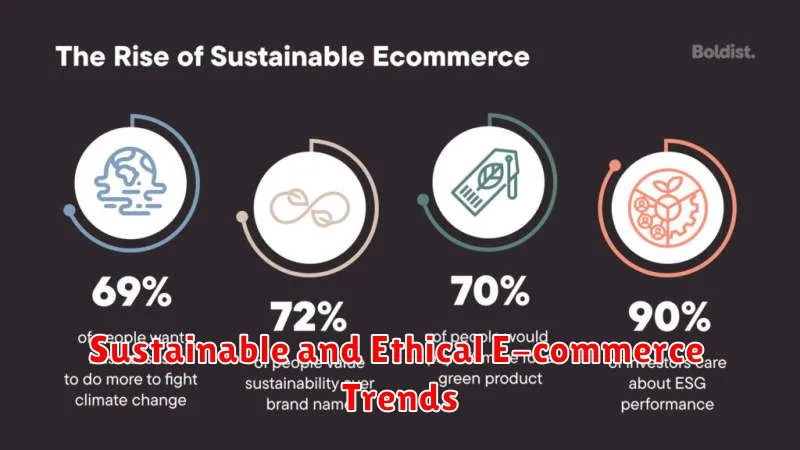
The future of e-commerce is inextricably linked to sustainability and ethical practices. Consumers are increasingly demanding transparency and accountability from brands, driving a shift towards more responsible business models.
Sustainable packaging is a key trend, with a focus on reducing waste through biodegradable or compostable materials, and minimizing packaging overall. Circular economy models, such as product take-back programs and initiatives promoting repair and reuse, are gaining traction.
Ethical sourcing and fair trade practices are also critical. Consumers are more aware of the social and environmental impact of their purchases and are seeking brands committed to fair wages, safe working conditions, and environmentally responsible production methods.
Carbon-neutral shipping and local sourcing are emerging as important strategies for reducing the environmental footprint of e-commerce. Brands are exploring innovative ways to minimize their carbon emissions throughout the supply chain.
Finally, transparency and traceability are becoming increasingly important. Consumers want to know where their products come from and how they are made, demanding greater visibility into the entire supply chain.
How Cryptocurrency is Transforming Online Payments
Cryptocurrency is rapidly changing the landscape of online payments, offering several key advantages over traditional methods. Decentralization is a core benefit, reducing reliance on centralized institutions and potentially lowering transaction fees.
Increased security is another significant factor. Blockchain technology, the foundation of most cryptocurrencies, provides a transparent and tamper-proof record of transactions, minimizing fraud risks.
Furthermore, cryptocurrencies facilitate faster and more efficient transactions, often bypassing the lengthy processing times associated with traditional payment systems. This speed is particularly crucial for global e-commerce.
However, the volatility of cryptocurrency prices presents a challenge for widespread adoption. Regulatory uncertainty also remains a significant hurdle to overcome for broader integration into online payment systems.
Despite these challenges, the potential for cryptocurrency to revolutionize online payments is undeniable. As technology advances and regulations evolve, cryptocurrency is poised to play an increasingly important role in the future of e-commerce.
The Role of Social Commerce in E-commerce Growth
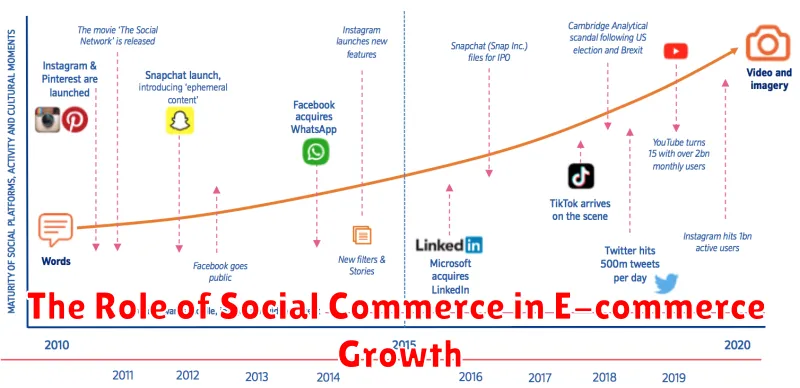
Social commerce is rapidly transforming the e-commerce landscape, contributing significantly to its growth. It leverages the power of social media platforms to facilitate the buying and selling of products and services. This integration offers several key advantages.
Increased Brand Awareness and Reach: Social commerce allows businesses to reach wider audiences organically and through targeted advertising, boosting brand visibility and driving traffic to their e-commerce platforms.
Enhanced Customer Engagement: Direct interaction with customers on social media fosters stronger relationships, allows for personalized recommendations, and facilitates immediate feedback, improving customer loyalty and satisfaction.
Simplified Purchasing Process: Integrating shopping directly into social media platforms streamlines the purchase process, removing the need for users to navigate to separate websites, increasing conversion rates.
Leveraging Influencer Marketing: Collaborations with social media influencers can significantly increase brand reach and credibility, driving sales through trusted recommendations.
Data-Driven Insights: Social commerce platforms provide valuable data on consumer behavior, preferences, and trends, enabling businesses to optimize their marketing strategies and product offerings.
In conclusion, social commerce is a powerful catalyst for e-commerce growth, offering businesses innovative ways to connect with customers, drive sales, and build lasting brand loyalty. Its seamless integration and impactful features position it as a key driver of future e-commerce success.
Preparing for the Future of Online Shopping
The future of online shopping demands proactive adaptation from businesses. Personalization will be paramount, requiring sophisticated data analysis and AI to tailor experiences to individual customer preferences. Omnichannel strategies are essential, seamlessly integrating online and offline shopping journeys. This includes robust delivery options, from same-day delivery to click-and-collect, and an enhanced return process to improve customer satisfaction.
Sustainability will increasingly influence consumer choices. Businesses should prioritize eco-friendly packaging and shipping methods, and transparently communicate their sustainability efforts. Furthermore, embracing emerging technologies such as augmented reality (AR) and virtual reality (VR) for product visualization and immersive shopping experiences is crucial for staying competitive. Cybersecurity remains a vital concern, requiring robust measures to protect customer data and maintain trust.
Ultimately, preparing for the future of online shopping involves a multifaceted approach. Businesses must invest in technology, data analytics, and customer-centric strategies to remain relevant and thrive in an ever-evolving landscape. Continuous innovation and a willingness to adapt to emerging trends are vital for long-term success.
