
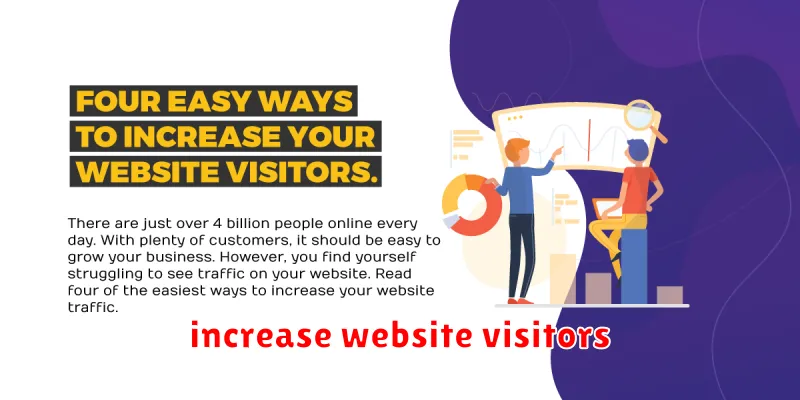
Are you struggling to attract more visitors to your website? Increasing website traffic is crucial for business growth, and this article outlines effective strategies to achieve significant improvements. We’ll explore proven methods to boost your online visibility, including SEO optimization, content marketing, social media promotion, and paid advertising. Learn how to implement these tactics to drive more targeted traffic to your site and ultimately achieve your business objectives. Discover the secrets to unlocking increased website traffic and gain a competitive edge online.
The Importance of Organic Traffic
Organic traffic, derived from unpaid search engine results, is crucial for long-term website success. Unlike paid advertising, which ends when the budget does, organic traffic provides a sustainable stream of visitors. This consistent flow builds brand awareness and establishes your website as a trusted authority in your niche.
High organic rankings demonstrate search engine credibility, influencing user trust and encouraging engagement. This increased visibility leads to higher conversion rates and ultimately, improved ROI. Furthermore, organic traffic tends to have a higher conversion rate than paid traffic because these users are actively searching for information related to your offerings.
Investing in SEO (Search Engine Optimization) to improve organic traffic is a long-term strategy that yields substantial benefits. It builds a strong foundation for sustainable growth, reducing reliance on costly paid advertising campaigns and fostering a loyal audience organically.
How to Use SEO to Attract More Visitors
Search Engine Optimization (SEO) is crucial for attracting more visitors to your website. By optimizing your site for search engines, you increase your visibility to potential customers actively searching for products or services you offer.
Keyword research is the foundation of effective SEO. Identify relevant keywords – words and phrases people use when searching online – related to your business. Incorporate these keywords naturally into your website’s content, including page titles, headings, and meta descriptions.
On-page optimization involves optimizing individual web pages. This includes ensuring your pages are well-structured, easy to navigate, and load quickly. High-quality, original, and informative content is paramount. Use relevant images with descriptive alt text.
Off-page optimization focuses on building your website’s authority and reputation. This involves earning high-quality backlinks from reputable websites. Engage in social media marketing and build a strong online presence to drive traffic and improve your search engine rankings.
Regularly monitor your SEO performance using analytics tools. Track your keyword rankings, website traffic, and other relevant metrics to identify areas for improvement and adjust your strategy accordingly. Consistent effort and adaptation are key to long-term SEO success.
Leveraging Social Media for Website Traffic
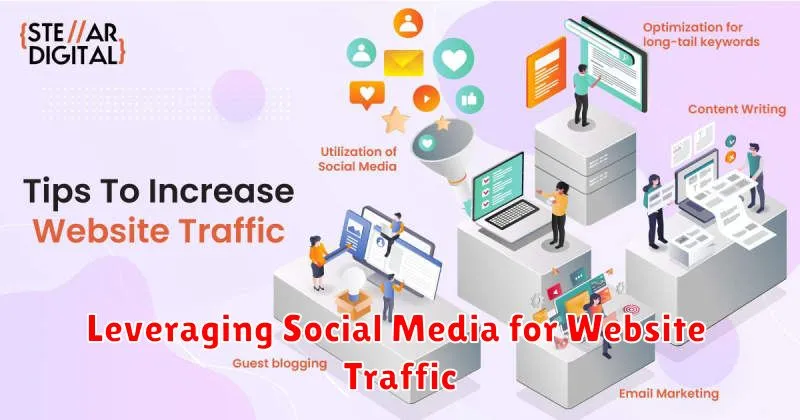
Social media presents a powerful avenue for driving significant website traffic. Strategic implementation is key to success. This involves identifying the platforms most relevant to your target audience.
Content is king. Share engaging, valuable content tailored to each platform’s unique audience and format. This could include short videos, visually appealing infographics, or compelling articles—all designed to pique interest and encourage clicks to your website.
Consistent posting is crucial for maintaining visibility and engagement. A regular posting schedule keeps your brand top-of-mind and ensures a steady stream of traffic. Utilize scheduling tools to maintain consistency even with busy schedules.
Engage with your audience actively. Respond to comments, participate in relevant conversations, and foster a sense of community. This interaction builds brand loyalty and drives traffic organically.
Utilize paid social media advertising to target specific demographics and interests. Paid campaigns can significantly amplify reach and drive targeted traffic to your website, boosting overall effectiveness.
Track and analyze your results. Use platform analytics to understand what’s working and what’s not. Adjust your strategy accordingly to maximize ROI and optimize your social media marketing efforts for consistently strong website traffic.
Email Marketing as a Traffic Booster
Email marketing remains a highly effective strategy for driving website traffic. A well-executed email campaign can significantly boost your website’s visibility and engagement.
Targeted campaigns are key. Segment your email list based on demographics, interests, and past behavior to deliver highly relevant content. This personalization increases open and click-through rates, leading to more website visits.
Compelling subject lines are crucial for grabbing recipients’ attention and encouraging them to open your emails. Use strong verbs and create a sense of urgency or intrigue.
The email’s content itself should be valuable and engaging. Offer exclusive content, promotions, or valuable information related to your website’s offerings. Include clear calls-to-action (CTAs) with prominent buttons or links leading directly to your website.
Tracking and analysis are essential to measure the success of your email marketing efforts. Monitor key metrics such as open rates, click-through rates, and conversion rates to optimize future campaigns and maximize your return on investment (ROI).
By consistently implementing these strategies, email marketing can serve as a powerful tool for generating sustainable website traffic and achieving your online business goals.
The Role of Backlinks in Website Growth

Backlinks, or inbound links from other websites, are crucial for website growth. Search engines like Google view backlinks as votes of confidence, indicating that your website offers valuable and relevant content.
A high number of high-quality backlinks from reputable sources significantly boosts your website’s search engine ranking. This increased ranking leads to higher visibility in search results, driving more organic traffic to your site.
Furthermore, backlinks improve your website’s domain authority. A strong domain authority signifies trustworthiness and expertise in your niche, attracting more users and potentially leading to increased engagement and conversions.
Building backlinks requires strategic effort. Effective strategies include guest blogging, creating high-quality content that others will naturally link to, and participating in relevant online communities.
In short, a robust backlink profile is a cornerstone of successful website growth, driving increased traffic, improved ranking, and enhanced online visibility.
Optimizing Your Website for Mobile Users
Mobile optimization is crucial for increasing website traffic. A significant portion of internet users browse the web via smartphones and tablets. A poorly optimized mobile site leads to high bounce rates and lost potential visitors.
To optimize, ensure your website is responsive. This means it adapts seamlessly to different screen sizes. Utilize a mobile-first design approach, prioritizing the mobile experience. Use lightweight images and efficient code to speed up loading times, as slow loading significantly impacts user experience on mobile devices.
Improve navigation with easy-to-use menus and clear calls to action. Consider using a single-column layout for easier reading on smaller screens. Ensure touch-friendly elements; buttons and links should be large enough to easily tap.
Regularly test your mobile site using browser developer tools or online mobile emulators to identify and address any usability issues. Monitor your mobile traffic analytics to understand user behavior and make data-driven improvements. Addressing mobile usability is key to attracting and retaining a larger audience and boosting your website’s overall traffic.
Using Paid Advertising to Drive More Visitors

Paid advertising offers a powerful way to rapidly increase website traffic. Pay-per-click (PPC) campaigns, such as those on Google Ads or social media platforms, allow you to target specific demographics and interests, ensuring your ads reach the most relevant audience.
Effective keyword research is crucial for successful PPC campaigns. Identifying the terms your target audience uses to search for products or services like yours ensures your ads appear when potential customers are actively searching.
Precise targeting is key to maximizing your return on investment (ROI). Utilize the various targeting options available, including location, demographics, interests, and behaviors, to refine your audience and reduce wasted ad spend.
Compelling ad copy is essential to capture attention and drive clicks. Use strong calls to action (CTAs) and highlight the unique value proposition of your website or product.
Regular monitoring and optimization are vital for maintaining a high-performing campaign. Track key metrics like click-through rates (CTR), conversion rates, and cost per acquisition (CPA) to identify areas for improvement and adjust your strategy accordingly. A/B testing different ad variations can significantly improve your results.
While paid advertising can be effective, remember to set a realistic budget and track your spending closely to ensure you are achieving a positive ROI.
Analyzing and Improving User Experience for Better Retention
Improving user experience (UX) is crucial for increasing website traffic and, more importantly, retaining visitors. A positive UX fosters loyalty and encourages repeat visits, ultimately leading to higher conversion rates.
Analyzing user behavior is the first step. Tools like Google Analytics provide valuable insights into user interactions, including bounce rates, time on site, and pages per visit. This data helps pinpoint areas needing improvement. Understanding where users struggle or drop off is key.
Improving UX involves addressing identified pain points. This might include optimizing website speed, simplifying navigation, improving site search functionality, or ensuring mobile responsiveness. Clear calls to action and intuitive design are also essential for guiding users towards desired outcomes.
A/B testing allows for controlled experimentation to determine the effectiveness of UX changes. By comparing different versions of a page or feature, you can identify the elements that best resonate with your target audience. Continuously testing and iterating on design elements is vital for ongoing optimization.
Gathering user feedback directly through surveys, polls, or user interviews provides invaluable qualitative data to complement quantitative analytics. This helps understand user perspectives and motivations, leading to more informed design decisions.
By implementing these strategies, you can create a website that is not only easy to navigate and visually appealing but also tailored to the needs and preferences of your users. This, in turn, directly contributes to higher user retention and, ultimately, increased website traffic.
