
Are you struggling to achieve high email open rates and boost engagement with your email marketing campaigns? This article explores proven email marketing strategies to significantly improve your results. Learn how to craft compelling subject lines, personalize your emails for maximum impact, segment your audience effectively, and optimize your email content for various devices to drive higher click-through rates and ultimately, a substantial increase in customer engagement. Discover actionable steps to transform your email marketing from a passive tool to a powerful engine for lead generation and sales growth.
Why Email Marketing is Still Relevant
Despite the rise of social media and other digital marketing channels, email marketing remains a highly effective strategy. Its high return on investment (ROI) is a key factor. Email allows for direct communication with your target audience, bypassing algorithms and ensuring your message is seen.
Personalization is another significant advantage. Email allows for targeted messaging based on customer segmentation and behavior, leading to increased engagement and conversions. This level of personalization is difficult to achieve through other channels.
Furthermore, email marketing provides valuable data and analytics. Open rates, click-through rates, and conversion rates offer insights into campaign performance, allowing for continuous optimization and improvement. This data-driven approach enables marketers to refine strategies and maximize results.
Finally, email is a cost-effective channel compared to many other marketing methods. While there are costs associated with email marketing platforms and potentially email design, the overall cost is often significantly lower than paid social media advertising or print campaigns, particularly when considering the potential ROI.
How to Build an Engaged Email List
Building a highly engaged email list requires a multi-pronged approach focusing on quality over quantity. Lead magnets, such as valuable ebooks, checklists, or webinars, entice potential subscribers to willingly share their email addresses in exchange for immediate value. Ensure these offers directly relate to your products or services.
Optimize your signup forms for ease of use. Keep them short and concise, requesting only essential information. Strategically place them on your website, especially on high-traffic pages and blog posts. Consider offering a variety of ways to subscribe, such as pop-ups (used sparingly!), embedded forms, and social media links.
Segment your audience to personalize your communication. Divide your list into groups based on shared interests, demographics, or purchase history. This allows for tailored messaging, resulting in higher engagement rates.
Deliver exceptional content consistently. Provide valuable, relevant information through engaging emails. This could include newsletters, product updates, exclusive offers, and behind-the-scenes content. Maintain a consistent sending schedule to reinforce habits and keep your audience informed.
Finally, monitor and analyze your email marketing performance. Track open rates, click-through rates, and conversions to identify what resonates with your audience and adjust your strategy accordingly. Utilize email marketing software for advanced analytics and automated campaigns.
Crafting the Perfect Email Subject Line
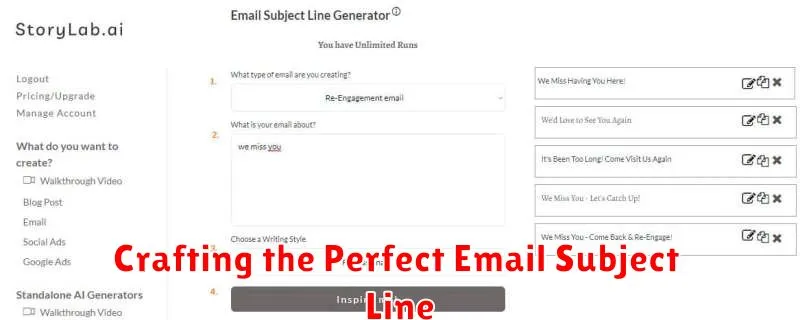
The email subject line is the first, and often only, impression you make on your recipient. A poorly crafted subject line can lead to your email being ignored, while a compelling one increases the likelihood of it being opened.
Brevity is key. Keep it concise and to the point; aim for under 50 characters to avoid truncation on mobile devices. Clarity is equally important. Clearly communicate the email’s purpose and value proposition.
Personalization significantly boosts engagement. Use the recipient’s name or reference their past interactions. Intrigue can also work well; use questions or create a sense of urgency, but avoid being misleading.
Testing is crucial. A/B test different subject lines to see which performs best with your audience. Analyze open rates and click-through rates to identify what resonates.
Ultimately, crafting the perfect subject line requires a blend of creativity, understanding your audience, and data-driven optimization. By focusing on these key elements, you can significantly improve your email marketing campaign’s success.
Personalization Strategies for Higher Open Rates
Personalization is key to boosting email open rates. Recipients are more likely to engage with emails that feel relevant and tailored to their individual needs and preferences.
Segmentation is a crucial first step. Divide your audience into smaller groups based on demographics, behavior (past purchases, website activity), or preferences (sign-up forms, survey responses). This allows for targeted messaging.
Personalized subject lines significantly impact open rates. Use the recipient’s name or reference their past interactions. A/B testing different subject lines, including personalized variations, is recommended.
Dynamic content allows you to tailor the email body itself. This could include personalized product recommendations, customized offers, or content based on their location or interests. This ensures the message is highly relevant.
Leverage data effectively. Use CRM and marketing automation tools to collect and analyze customer data to inform personalization strategies. The more you know about your audience, the more effectively you can personalize.
Consistent personalization across all touchpoints creates a cohesive and personalized brand experience, improving engagement and loyalty beyond just email open rates.
How to Create Automated Email Campaigns
Automated email campaigns are crucial for boosting engagement and efficiency in email marketing. To create effective ones, start with clearly defined goals. What do you want to achieve? Increased sales? Improved brand awareness? This will dictate your campaign’s structure and content.
Next, segment your audience. Segmentation allows you to send targeted messages to specific groups based on demographics, behavior, or purchase history. This personalization significantly increases engagement rates.
Choose the right email marketing platform. Many platforms offer automation features, allowing you to schedule emails based on triggers (e.g., website activity, purchase, birthday). Explore features like workflow builders to easily design your automated sequences.
Craft compelling email content. Use a clear subject line, engaging body copy, and a strong call to action. A/B test different subject lines and content to optimize your results. Remember to maintain a consistent brand voice and design.
Monitor and analyze your campaign’s performance using platform analytics. Track key metrics such as open rates, click-through rates, and conversions. Use this data to refine your strategy and improve future campaigns. Regularly review and update your automation workflows to ensure optimal performance and relevance.
Using A/B Testing to Improve Email Performance
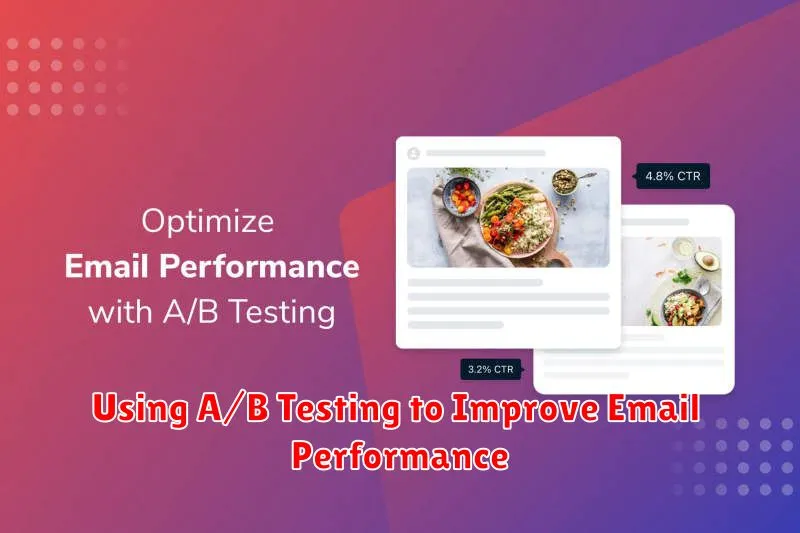
A/B testing, also known as split testing, is a crucial element of effective email marketing. It allows you to compare different versions of your emails to determine which performs better, ultimately boosting engagement rates.
Key elements to test include: subject lines (testing different phrasing, lengths, and calls to action), sender names (exploring variations to improve recognition and open rates), email content (comparing different layouts, imagery, and calls to action), and call-to-action buttons (optimizing placement, wording, and design for maximum clicks).
By systematically testing these variables, you can identify which approaches resonate most effectively with your audience. This data-driven approach enables you to refine your email strategy, leading to increased open rates, click-through rates, and ultimately, improved conversion rates. Analyzing the results meticulously is critical to understanding what works best and continually optimizing your email campaigns for optimal performance.
Remember to test only one variable at a time to accurately isolate the impact of each change. Using a statistically significant sample size ensures reliable results that inform future email marketing efforts.
The Role of Newsletters in Brand Awareness
Newsletters play a crucial role in building brand awareness. They provide a consistent and direct communication channel to reach your target audience. By regularly delivering valuable content, such as company updates, product announcements, and industry insights, you cultivate familiarity and positive associations with your brand.
Effective newsletters go beyond simple promotions. They should focus on providing engaging content that educates, entertains, or informs your audience. This helps establish your brand as a thought leader in your industry and builds trust with your subscribers.
Furthermore, newsletters allow for targeted messaging. You can segment your audience and tailor content to their specific interests, leading to increased engagement and brand recall. This personalized approach significantly contributes to stronger brand awareness and helps nurture customer relationships.
Ultimately, a well-executed newsletter strategy is an invaluable asset for enhancing brand visibility, strengthening brand identity, and fostering a loyal customer base. This contributes directly to increased brand awareness and overall marketing success.
Measuring Email Marketing Success
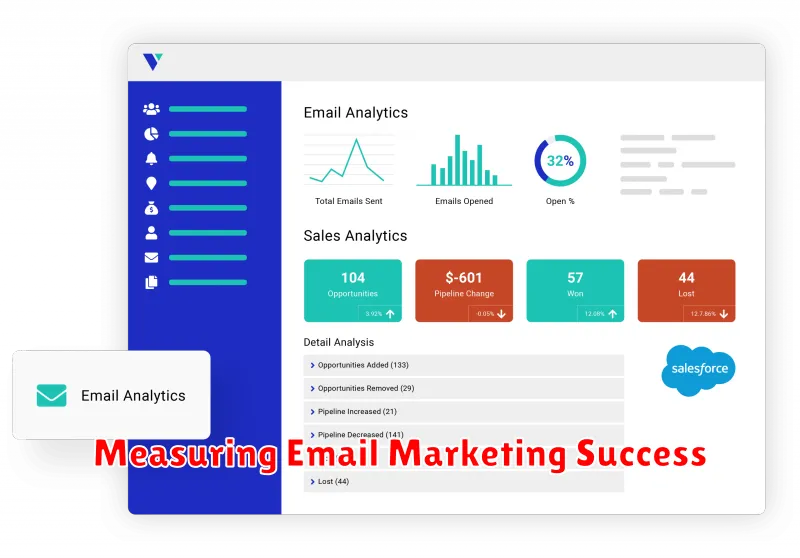
Measuring the success of your email marketing campaigns is crucial for optimizing future strategies. Key Performance Indicators (KPIs) provide quantifiable data to understand your campaign’s effectiveness.
Open rates reveal how many recipients viewed your email. A high open rate suggests a compelling subject line and sender reputation. Click-through rates (CTRs) indicate the percentage of recipients who clicked on links within the email, showcasing engaging content and effective calls to action.
Conversion rates measure the percentage of recipients who completed a desired action (e.g., purchase, sign-up). This metric directly reflects the campaign’s impact on your business goals. Bounce rates, indicating undelivered emails, help identify email list hygiene issues requiring attention.
Unsubscribe rates show the percentage of recipients who opted out. While some is normal, high rates signal problems with content relevance or sender reputation. Analyzing these KPIs allows for data-driven decisions to refine your email marketing strategies and achieve better results.
