

Crafting a winning social media strategy is crucial for businesses seeking to thrive in today’s digital landscape. This comprehensive guide will equip you with the essential tools and knowledge to develop a high-performing social media presence, from identifying your target audience and setting SMART goals to creating engaging content, measuring your results, and adapting your strategy for optimal performance. Learn how to leverage social media marketing to boost brand awareness, drive traffic to your website, and ultimately achieve your business objectives.
Defining Your Social Media Goals
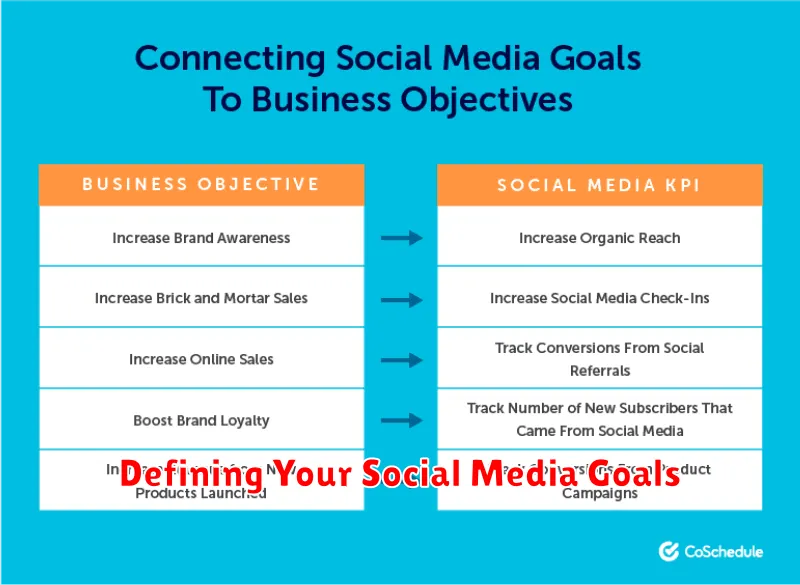
Before diving into tactics, establishing clear and measurable social media goals is paramount. These goals should align with your overall business objectives. Are you aiming to increase brand awareness, drive website traffic, generate leads, or boost sales? Defining your primary objective provides a framework for all subsequent decisions.
Specificity is key. Instead of vaguely aiming for “more followers,” set a target, such as “gain 1,000 followers on Instagram within three months.” Similarly, instead of aiming for “increased engagement,” specify a metric like “achieve a 5% engagement rate on Facebook posts.” These quantifiable goals allow you to track progress and measure success.
Consider using the SMART framework: Specific, Measurable, Achievable, Relevant, and Time-bound. This ensures your goals are realistic and provide a clear path toward achievement. For example, a SMART goal might be: “Increase website traffic from social media by 20% in the next quarter by consistently posting engaging content related to new product launches.”
Remember to regularly review and adjust your goals. The social media landscape is constantly evolving, and your strategies may need to adapt accordingly. Consistent monitoring and adjustments will ensure your efforts remain aligned with your overall business objectives and market trends.
Identifying Your Target Audience
A winning social media strategy hinges on understanding your target audience. This involves more than just age and location; it’s about identifying their needs, interests, pain points, and online behavior.
Consider creating detailed buyer personas. These semi-fictional representations of your ideal customer should include demographics, psychographics (values, attitudes, lifestyles), online habits (platforms used, content consumed), and their goals. Detailed personas provide a clear picture of who you’re trying to reach.
Analyzing your existing customer data is crucial. Examine demographics, purchase history, and engagement metrics on your current social media channels to identify trends and patterns. This provides valuable insights into your current audience and informs your targeting for future campaigns.
Use social listening tools to understand conversations happening around your industry and brand. Monitoring relevant hashtags, keywords, and mentions can reveal valuable information about your target audience’s preferences and unmet needs.
Once you’ve identified your target audience segments, you can tailor your content, messaging, and ad targeting to resonate effectively. This ensures your social media efforts are focused and yield maximum impact.
Creating a Social Media Content Calendar
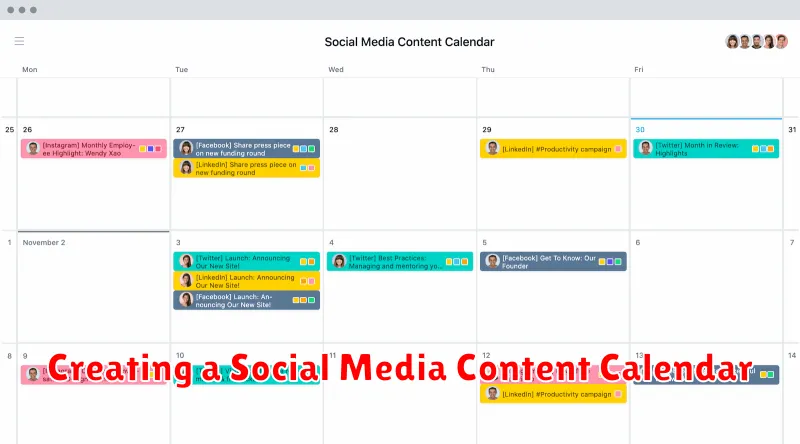
A social media content calendar is crucial for a winning social media strategy. It provides a structured overview of your planned posts, ensuring consistent engagement and brand messaging.
Start by defining your goals. What do you want to achieve with your social media presence? Increased brand awareness? More leads? Higher sales? Your goals will dictate the type of content you create.
Next, identify your target audience. Understanding their interests, preferences, and online behavior is critical for creating relevant and engaging content. Tailor your content to resonate with their needs and pain points.
Then, brainstorm content ideas. This could include text posts, images, videos, stories, or live streams. Consider a mix of formats to keep your audience engaged. Remember to align your content with your brand’s voice and personality.
Choose your platforms carefully. Focus on the platforms where your target audience spends the most time. Don’t spread yourself too thin across too many platforms.
Finally, schedule your posts. Using a social media management tool can automate the posting process and save you time. Remember to analyze your results and adjust your strategy based on performance.
A well-crafted content calendar ensures consistent, relevant content, maximizes reach, and contributes significantly to a winning social media strategy. Regular review and adjustments are key to its effectiveness.
The Role of Storytelling in Social Media
In today’s saturated social media landscape, storytelling is crucial for cutting through the noise and connecting with your audience on a deeper level. It allows you to move beyond simple product promotion and build authentic relationships with potential customers.
Effective storytelling on social media involves crafting compelling narratives that resonate with your target audience’s values and emotions. This could involve sharing customer success stories, showcasing behind-the-scenes glimpses of your company culture, or highlighting the journey of your brand’s creation. The key is to be genuine and relatable.
By weaving narratives that are memorable and engaging, you increase brand recall and foster loyalty. Social media platforms are ideal for visual storytelling; incorporating high-quality images and videos significantly enhances the impact of your narratives. Consider using different formats like short videos, carousels, and even live streams to keep your audience engaged.
Ultimately, a strong social media strategy leverages storytelling to humanize your brand, build trust, and drive meaningful interactions. It transforms your social media presence from a mere promotional tool into a platform for building a vibrant community around your brand.
Using Hashtags and Trends to Increase Reach
Effectively utilizing hashtags and trends is crucial for expanding your social media reach. Hashtags categorize your content, making it discoverable by users searching for specific topics. By including relevant hashtags, you increase the visibility of your posts to a wider audience interested in your niche.
Staying updated on current trends allows you to participate in relevant conversations and capitalize on trending topics. This can significantly boost engagement and exposure, as your content will be seen by users actively engaged with those trends. However, avoid using irrelevant or overly saturated hashtags; focus on a mix of popular and niche-specific tags to optimize your strategy.
Research is key. Analyze which hashtags perform best for your competitors and industry. Tools are available to help you identify trending topics and track hashtag performance, allowing for data-driven hashtag selection and optimization of your social media strategy for maximum reach.
How to Leverage User-Generated Content

User-generated content (UGC) is a powerful tool for boosting your social media strategy. It provides authenticity and social proof, building trust with your audience far more effectively than branded content alone.
To leverage UGC effectively, first encourage creation. Run contests, ask questions, and use interactive features like polls and quizzes. Make it easy for users to share their experiences with your brand using a clear call to action.
Next, actively gather and curate the best UGC. Monitor relevant hashtags, engage with users who mention your brand, and actively seek permission to repost their content. Always give proper credit to the original creator.
Finally, strategically distribute the collected UGC across your social media platforms. Showcase it prominently on your feed, in stories, and even in paid advertising campaigns. Highlight positive reviews and testimonials, demonstrating the value your product or service brings to customers.
By consistently implementing these steps, you can transform user engagement into valuable marketing assets, fostering a stronger community around your brand and ultimately achieving a more winning social media strategy.
Paid vs Organic Social Media Strategies
Developing a successful social media strategy requires understanding the interplay between paid and organic approaches. Both are vital, but serve different purposes.
Organic social media relies on creating high-quality content that naturally attracts engagement. This involves crafting compelling posts, utilizing relevant hashtags, and actively interacting with your audience. It’s a long-term strategy focused on building brand loyalty and trust, but growth can be slower.
Paid social media, or social media advertising, utilizes platforms’ advertising tools to boost visibility. This allows for targeted reach to specific demographics and interests, delivering immediate results. While offering quicker growth, it requires a budget and ongoing management.
The most effective strategy often involves a combination of both. Organic content builds a foundation, while paid advertising amplifies its reach and accelerates growth. Carefully consider your goals, budget, and resources when determining the optimal balance.
Measuring Social Media ROI
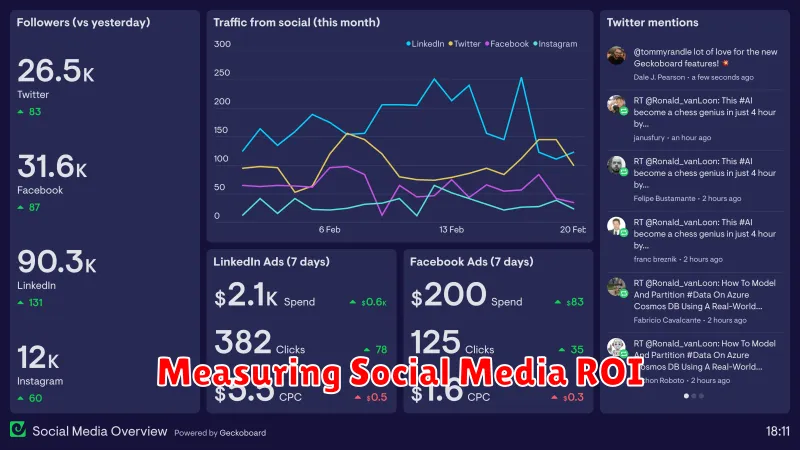
Measuring the return on investment (ROI) of your social media efforts is crucial for demonstrating the value of your strategy and securing future budget allocation. While direct attribution can be challenging, several key metrics provide valuable insights.
Website traffic, measured through UTM parameters in your social media links, directly links social media activity to website engagement. Tracking conversions, such as purchases or lead generation, originating from social media platforms, offers a clear picture of its impact on business objectives.
Brand awareness is harder to quantify directly but can be assessed through social listening tools, monitoring brand mentions and sentiment analysis. Analyzing engagement metrics like likes, shares, comments, and follower growth provides a qualitative understanding of audience interaction and brand resonance.
Cost per acquisition (CPA) and cost per engagement (CPE) are important benchmarks for calculating the efficiency of your social media campaigns. Comparing these metrics across different platforms and campaigns helps to optimize spending and identify high-performing strategies. By consistently tracking and analyzing these key metrics, you can accurately assess your social media ROI and refine your approach for improved results.
